

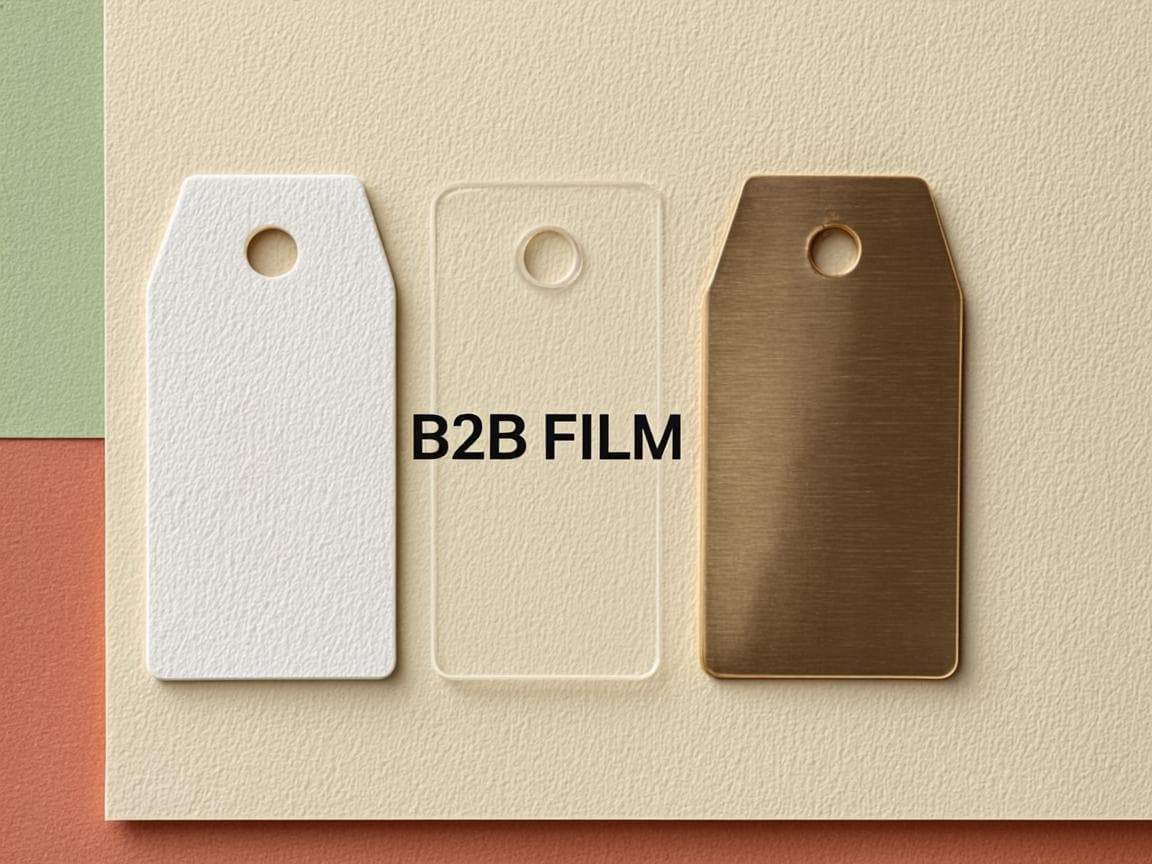
The substrate defines three things at once: cost per thousand, the label’s durability in its real environment, and perceived quality on the shelf. Choosing it for aesthetics without checking the conditions of use is the number one cause of labeling failures.
Coated Paper: The Economical Starting Point
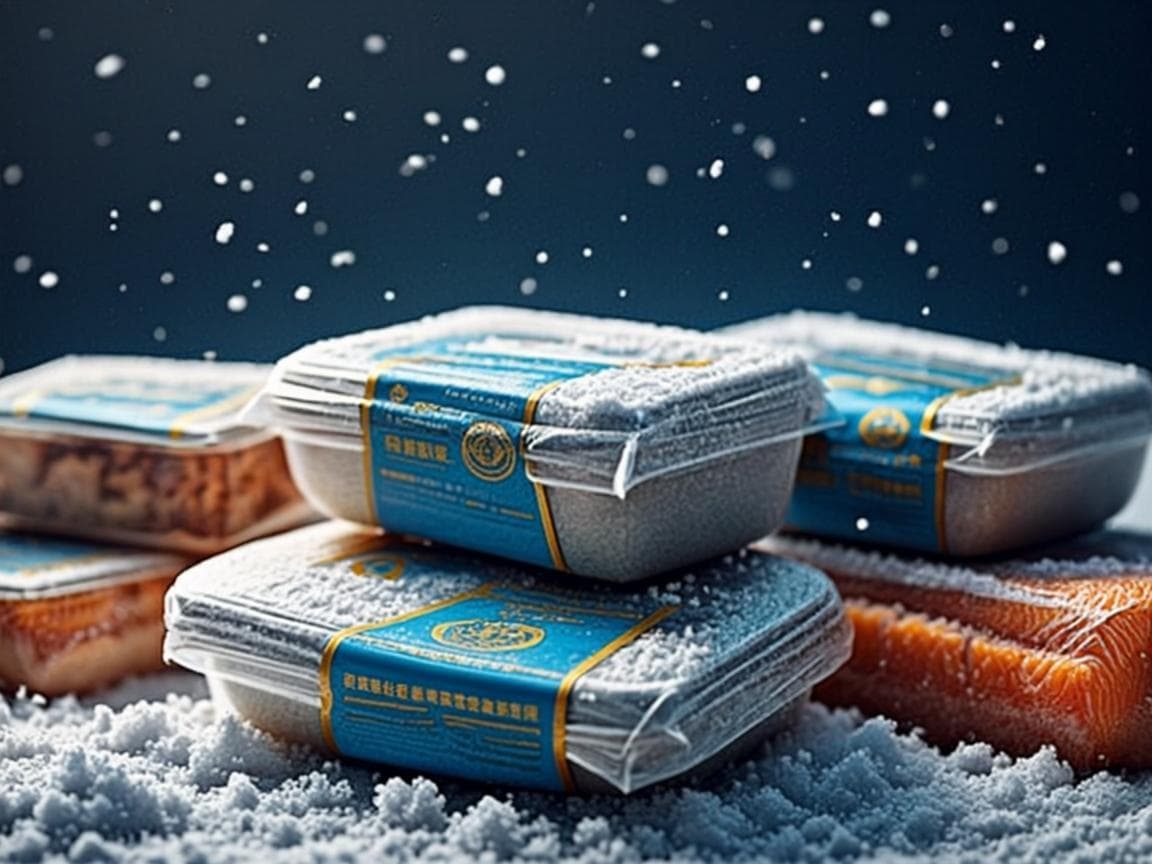
remains the economical starting point: it prints vivid colors with excellent definition and works for dry foods, retail, and indoor applications. Its limit is moisture — in cold rooms or on bottles with constant condensation, paper absorbs water and degrades.
BOPP: The Film Immune to Water and Grease
(biaxially oriented polypropylene) solves that: it’s a plastic film immune to water and grease, available in three presentations. Opaque white for maximum color saturation; transparent for the “no label look”, where only the ink shows on the container; and metallized for high-definition reflections without additional laminates.
Kraft and Polyester: Artisan Narrative or Maximum Resistance
Kraft delivers an artisan narrative and recycled content, with the trade-off of a shorter color gamut — bright, saturated tones aren’t achievable on dark fiber. Polyester (PET) offers maximum dimensional and chemical resistance: it’s the standard in industrial and pharmaceutical applications.
Biofilms: When the Premium Pays for Itself
Plant-based biofilms cost 30% to 70% more than their fossil-based equivalents. The difference is justified when your brand communicates sustainability with verifiable backing, or when the entire package is compostable and the label can’t be the link that breaks the cycle.
The Right Order for the Decision
A practical rule from our laboratory: first define friction on the packaging line, condensation, minimum/maximum temperature, and contact with greases or essential oils. Aesthetics are then resolved within the materials that survive those conditions — never the other way around.
The quote calculator estimates by technology, material, and finish.
ETIVAL Editorial Team
We manufacture for all of Mexico · ISO 9001:2015
Related tool
Technology Selection Assistant
5 answers, 3 candidate technologies.
More guides
Apply this to your project.
A technical advisor reviews your case in under 24 business hours.