

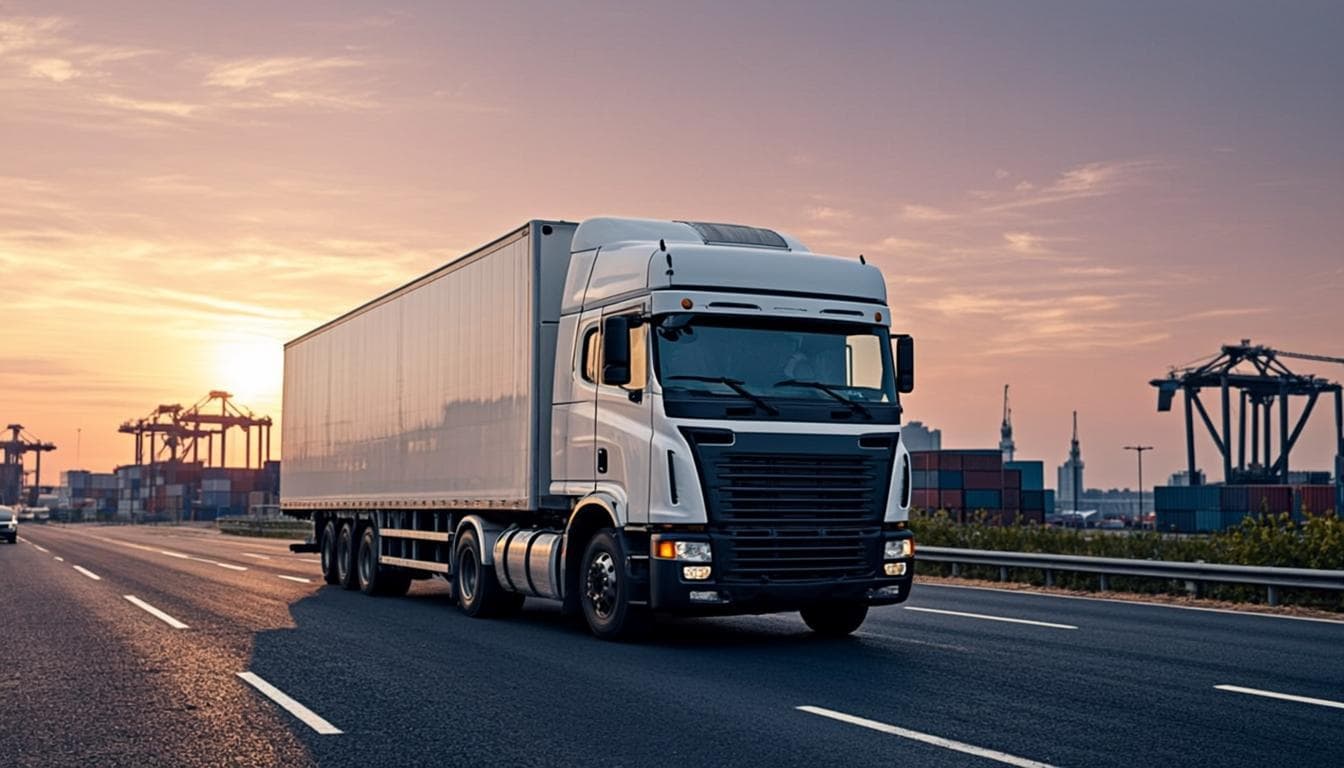
The quote lands by email from Shanghai: $0.30 per label against ETIVAL's $0.45. That is 33% less, same technical specification, same color sample. For any procurement department, the decision seems obvious. That is exactly the moment to stop and run the full arithmetic: the cheapest label in the world stops being cheap the moment it clears customs in Manzanillo.
This analysis compares both routes under the same operating assumptions — same volume, same daily consumption, same production line — and shows where the money the FOB invoice doesn't reflect is hiding.
- 70 days
- Real door-to-door lead time from China
- 15 days
- Lead time for an order produced in our plant (industry: 25)
- $38,000 MXN
- Typical freight + customs per consolidated (LCL) order
- 2.5%
- Major defects tolerated by design (AQL 2.5)
The mirage of the unit price
Comparing quotes on FOB price only makes sense if the rest of the chain is free. It isn't. Between the Chinese port and your warehouse there is cargo consolidation, 25 to 40 days of ocean transit across the Pacific, customs clearance, IGI, import VAT, handling, and inland transport. The logistics literature calls it landed cost, and it is the only price that exists for your operation.
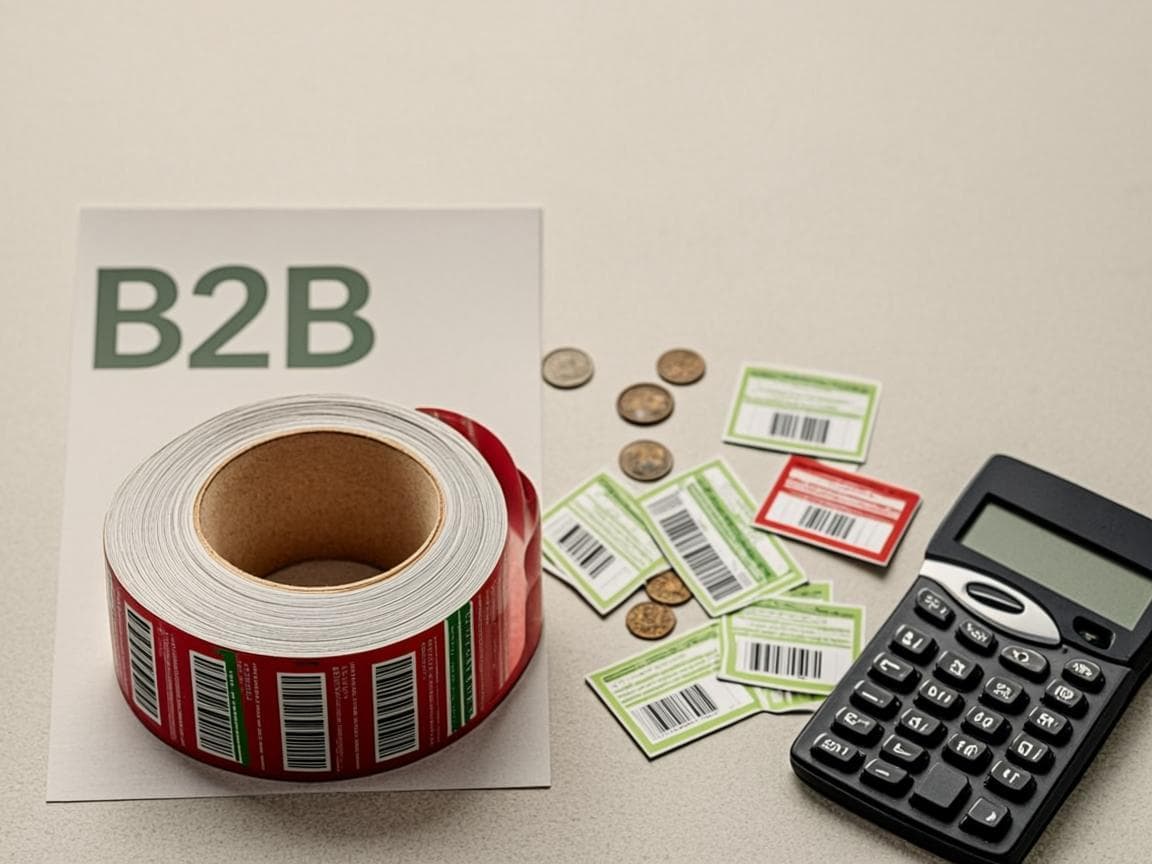
A consolidated (LCL) shipment of 2 to 3 cubic meters of labels pays today between $180 and $250 USD per cubic meter for international freight alone, plus customs broker fees of $3,500 to $15,000 MXN per operation, plus the DTA. On a 100,000-label order, that rack of fixed costs adds between $0.15 and $0.30 per label at once: the Asian “discount” is cut in half before it ever leaves customs.
Costs the FOB quote doesn't include (typical 100,000-label order, LCL 2–3 m³)
Time gets billed too
The complete chain for an order printed in China — color proof and approval, production, consolidation, transit, clearance, and delivery — takes 65 to 95 calendar days. The documented Mexican equivalent from a local manufacturer with its own laboratory is 15 business days — 10 days ahead of the industry standard (25). The difference is not a logistics detail: it defines how much inventory you have to hold so you never run out of labels.
The supply chain rule is simple: safety stock scales with lead time. A line consuming 20,000 labels a day needs ~1,400,000 labels of pipeline with a 70-day wait, versus ~300,000 with 15 days. That extra inventory is paid for today, takes up warehouse space, runs obsolescence risk whenever the artwork or the regulation changes — and it is financed with your working capital, not the Asian supplier's.
When something goes wrong: the asymmetry of accountability
Here is the point no Asian supplier puts in their quote. The industry standard for accepting an inspected batch in Asia is AQL 2.5: by design, up to 2.5% of major defects counts as an “approved” batch. If 2% of your labels arrive with misregistered print or smeared foil, the contract was formally met. And if you still file a claim, the claim crosses the Pacific: dispute with the seller, re-inspection, reprint, re-shipment. Another full 6-to-10-week cycle.
With a manufacturer 45 minutes from Mexico City International Airport, a rejection is resolved differently: the quality manager visits your plant, reviews the batch against the proof, and the reprint goes into production in days — not quarters. After-sales is the difference between a problem and a crisis.
In China, when a batch arrives defective, the ship has already sailed. Literally. Negotiating a reprint becomes a trans-Pacific dispute with no guarantee of resolution.
There is another cost almost nobody quantifies: stoppage risk. In food and beverage, one hour of stopped line costs between $4,000 and $30,000 USD — a reasonable Mexican midpoint: ~$180,000 MXN per hour. A delayed ship, a customs hold, or a rejected batch with thin safety stock stops the packaging line, not the procurement office. The probability of delay on a 70-day chain with three mode changes (factory → port → customs → truck) is structurally higher than that of a truck leaving our plant.
The familiarity that can't be imported
Buying labels in Mexico means buying inside your own regulatory and commercial context: a contract in Spanish under Mexican law, RFC and CFDI invoicing, schedules with no 14-hour gap, and a counterpart who understands what a PROFECO visit means. NOM-050-SCFI requires commercial information on national territory — product name, country of origin, responsible party in Mexico, contents — and adds front-of-pack labeling for prepackaged foods and beverages, imported or not.
Fines for non-compliant commercial information run from $52,128 to $781,920 MXN per violation, with merchandise potentially held. If a legend fails, fixing it with a local supplier takes days: reprint, release, deliver. With an Asian supplier it takes a full 6-to-10-week re-import cycle, with the product held in the meantime. Shared accountability with someone who knows your regulation is a risk asset, not flag-waving romanticism.
Regulatory risk is rising, not falling
Mexico has steadily raised tariffs on Chinese goods: 15–25% on plastics and other sectors since 2023, and TIGIE reforms that align parts of the Mexican tariff schedule with that of the United States, with floors of up to 50% for certain fractions. The savings you calculate today can evaporate with a decree published tomorrow. A supplier with a plant in Mexico never asks you to clear that customs office — not even once.
Honesty: when China actually wins
This analysis doesn't say China never wins. It does win — even on full TCO — in specific scenarios: enormous, stable print runs (millions of identical pieces), artwork with no foreseeable changes, products with no schedule pressure, natural tolerance for high defect rates, and in-house origin-inspection capability. If your operation checks those five boxes, the ship is a legitimate option.
- Annual runs in the millions of pieces with a frozen specification
- Stable artwork, with no campaigns or foreseeable regulatory changes
- No critical launch dates and no stoppage-sensitive lines
- Operational tolerance for ~2.5% defects (standard Asian AQL)
- Resources for pre-shipment inspection and capital for 70+ days of pipeline
For every other case — launches, growing brands, food and beverage under Mexican regulation, lines that cannot stop — total cost, risk, and after-sales all point to the same side of the map: produce nearby.
Run the test with your numbers
The “China vs. Mexico” debate ends quickly once every assumption is on the table: unit price, freight, defects, capital, risk. Our comparator — cost and time in a single tool — uses the ranges from this guide as its default values: all of them editable. It returns the real annual cost of each route with the full breakdown visible, plus your order deadlines.
5 minutes, total cost and delivery time in a single tool. Editable assumptions using the ranges from this guide.
At ETIVAL we manufacture for all of Mexico with ISO 9001:2015 certification, an in-house testing laboratory working on your actual container, and a 15-business-day process from brief to delivery — the industry standard is 25, and repeat orders arrive in 8 (industry: 15). If something goes wrong, the reprint doesn't cross any ocean: it is resolved where it originated. That is the advantage of a supplier that actually stands behind its work.
ETIVAL Editorial Team
We manufacture for all of Mexico · ISO 9001:2015
Related tool
China vs. Mexico Comparator
The real cost and the real time. Together.
More guides
Apply this to your project.
A technical advisor reviews your case in under 24 business hours.