

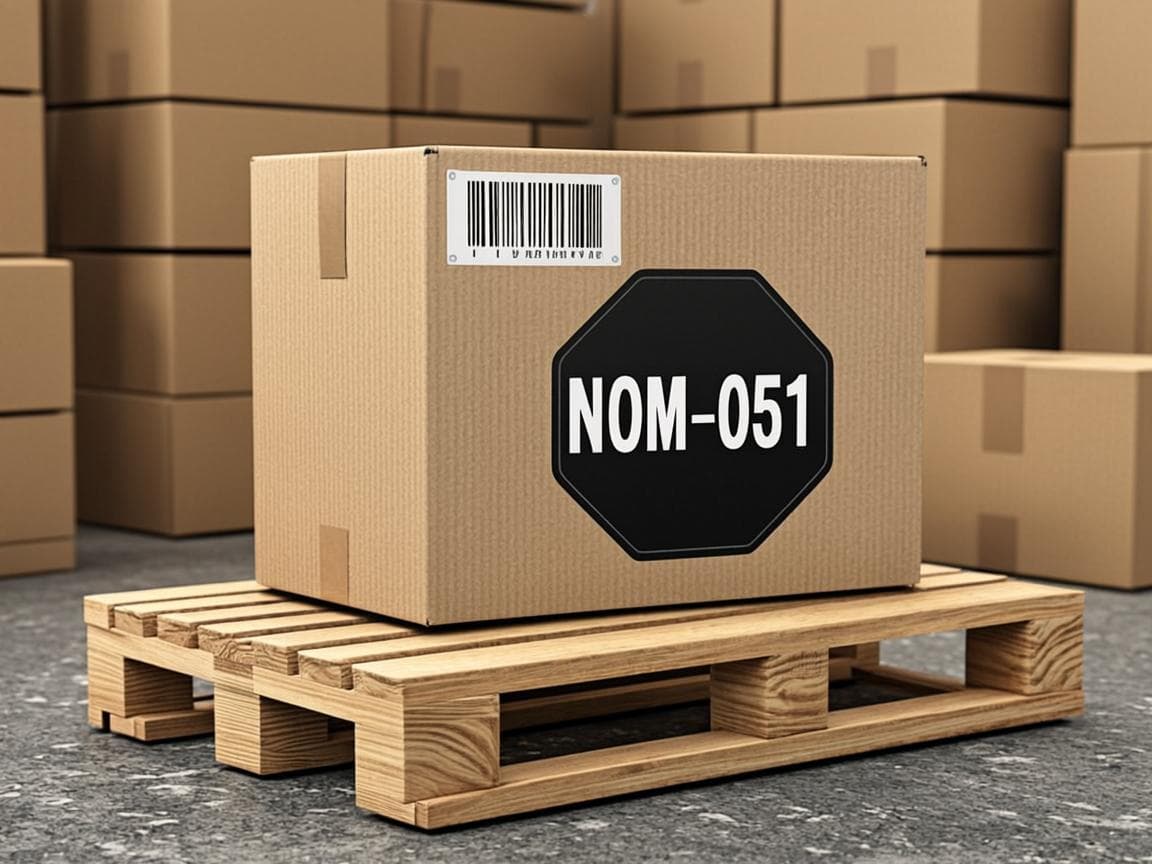
If you import packaged product, the responsibility for its label complying with Mexican regulation is yours — not the manufacturer who printed it at origin. And the artwork that arrives from the factory almost never passes verification: it is missing the importer's data, the mandatory Spanish, or the NOM-051 octagons with their exact geometry. The practical decision is not “comply or not”: it is deciding where and how the regulatory layer gets printed — at origin with validated artwork, or in Mexico as local re-labeling over the container.
ETIVAL prints the local regulatory layer (re-labeling, heat shrink sleeves that cover the original label, and complete flexographic labels) with regulatory review of the artwork before the run and ISO 9001:2015 lot traceability — for importers who need sellable product without waiting for another manufacturing cycle in Asia.
What the label of origin never gets right
Artwork that looks “pretty” from the origin designer's point of view usually fails on five points against the Mexican standard:
- Responsible party in Mexico: the importer's name, legal entity, and address — the standard requires local data, not the factory's address.
- Mandatory Spanish: the commercial information must be in Spanish, legible and indelible; multilingual artwork with minimum type in other languages is no substitute.
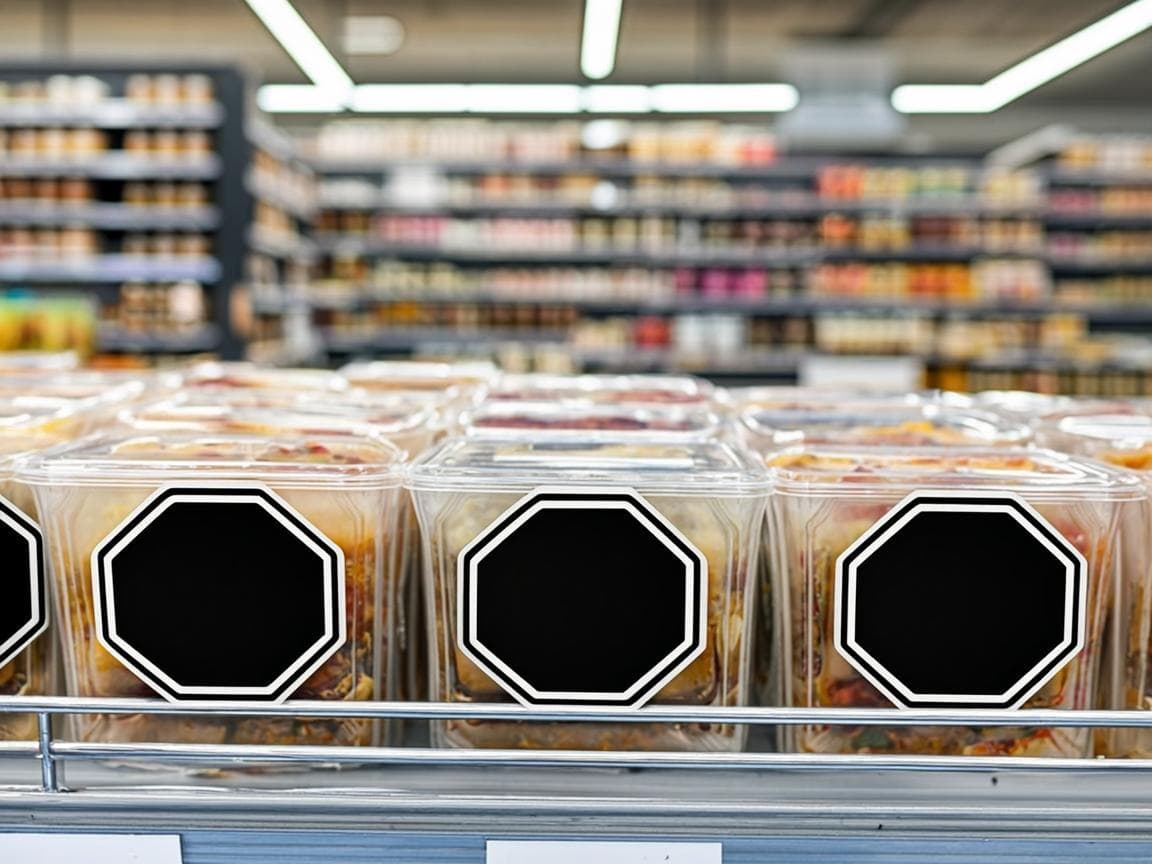
- front-of-pack labeling: the excess octagons (sugars, sodium, saturated fats, calories) have geometry, minimum type, and contrast specified down to the millimeter — an “approximate” octagon fails verification.
- Lot and expiration of the lot entering Mexico: they are assigned at reception, not at the factory — the label of origin cannot carry them pre-printed.
- Net content in General System units and the NOM-050 warnings whenever use implies risk.
The two strategies — and when each one makes sense
The importer's regulatory compliance: printing at origin vs. a local layer
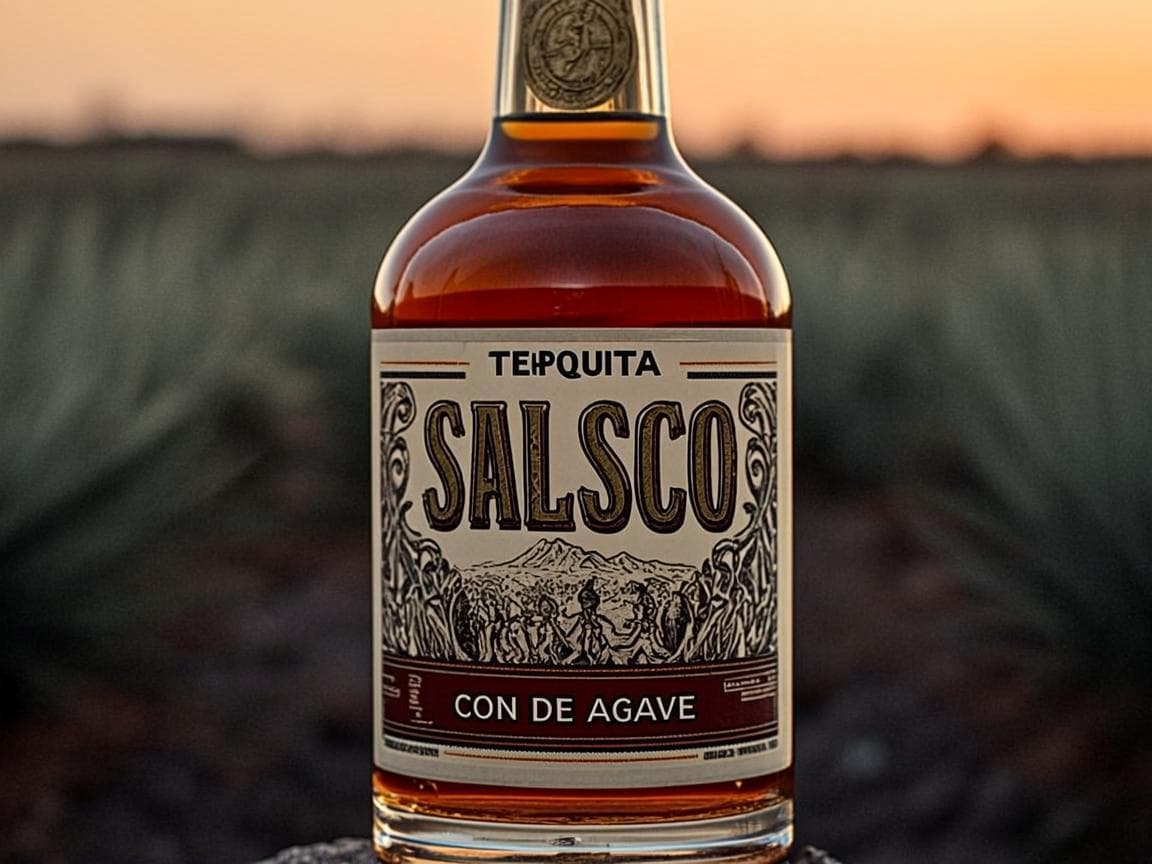
The second strategy has a star format: the heat shrink sleeve fully covers the original label and is printed here with the entire regulatory block — octagons included — without de-labeling or discarding containers. For glass and PET it is also the premium shelf presentation.
The real cost of the error, depending on where it was made
- 6–10
- Weeks of re-importation if the error was printed in Asia
- $781,920
- Maximum fine for violating commercial-information NOMs (MXN)
- 15 days
- Delivery of local re-labeling (repeats in 8)
- 24 h
- Quotation for the regulatory layer with artwork review
A regulatory error detected in verification stops the sale of the entire lot. With a local supplier, the correction is a run of days with lot traceability; with an Asian origin, it is returned or destroyed merchandise, freight, and an entire re-importation cycle while the shelf stays empty. That asymmetry is the operational argument for re-labeling.
The importer's checklist before releasing the order
- 01Ask your origin supplier for the artwork in VECTOR with separate layers — no text converted to curves on the regulatory fields.
- 02Define what gets printed there (brand, graphics) and what here (responsible party, lot, expiration, octagons): the boundary between layers must be documented.
- 03Validate the front-of-pack labeling geometry against the current NOM-051 before any print run — with the supplier that will print the local layer.
- 04Confirm permanence of the legal information: rub, moisture, and according to your sales channel.
- 05Demand evidence of color control and traceable lot records from the local run.
- 06Put the rework protocol in writing: what happens, who corrects it, and in how many days if verification detects a deviation.
NOM-050, NOM-051, importer responsibility, and PROFECO fine ranges.
A sleeve that covers the original label or a complete flexographic layer, with regulatory review included.
ETIVAL Editorial Team
We manufacture for all of Mexico · ISO 9001:2015
More guides
Apply this to your project.
A technical advisor reviews your case in under 24 business hours.