


The brand manager seeking premium shelf impact for wines, cosmetics, spirits, or gourmet supplements faces a technical decision: hot stamping or cold foil? Both deliver a metallic finish, but they operate on opposite physical principles that affect cost, graphic detail, lead time, and versioning flexibility. This guide breaks down the engineering of both processes.
The Financial Reality of Metallized Finishes
Conventional hot stamping
transfers metallic foil using an engraved magnesium or brass die, heated to 120°C–180°C and pressed against the . The fixed cost is high: manufacturing the tooling/die costs $8,000 to $15,000 MXN per design, with lead times of 5 to 10 days to make the die. Every design change requires a new die. Temperature is adjusted on the machine off-line, which means a production stop for every SKU change.
In-line cold foil
transfers the foil via UV adhesive printed on the same flexographic press. UV polymerization happens instantly: the adhesive is applied with a flexible plate (not a metal die), the foil is laminated onto the wet adhesive, and the UV cure fixes it in a single pass. There is no engraved die, no heat, and no machine stop for temperature adjustment.
Technical and economic comparison: Cold Foil vs. Hot Stamping
The Technical Advantage of In-Line Cold Foil
Cold foil doesn’t just eliminate tooling costs — it also enables graphic possibilities that hot stamping cannot produce. Because the UV adhesive is printed just like ink, we can create metallic gradients (gold-to-silver transitions), halftones, 6pt serif typography, and 0.2pt lines. Hot stamping, limited by its mechanical die, cannot reproduce these subtleties.
Sensory Impact on the Shelf
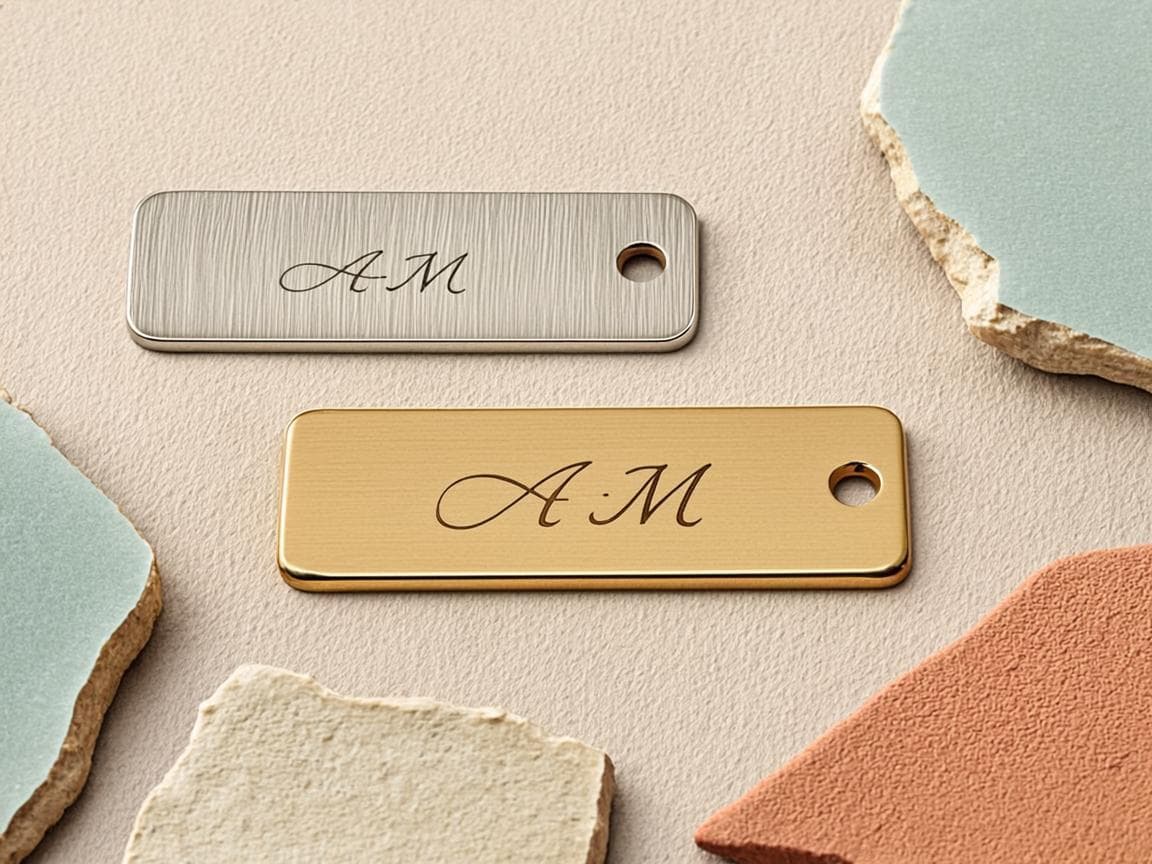
Premium impact doesn’t come from metallic foil alone — it comes from the tactile and visual contrast between finishes. ETIVAL integrates in the same flexographic pass: metallic cold foil + sectoral (selective gloss over matte) + embossed logo + soft-touch laminate (silky feel) on the background. The result is a label the consumer touches, turns, and remembers.
Recommended sensory combinations
- Gold cold foil + matte UV varnish over glossy backgrounds = metallic-on-matte contrast.
- Silver cold foil + embossed logo = tactile texture that invites touch.
- Holographic cold foil + soft-touch laminate = dual effect: dynamic shine + silky feel.
- Cold foil + matte inks combined with gloss = visual gradients impossible with hot stamping.
Visual Guide to Tolerances and Details
Specifications for minimum line weights, text sizes, and clearances to ensure perfect foil adhesion on and coated paper substrates:
Includes a tactile comparison of cold foil vs hot stamping.
ETIVAL Editorial Team
We manufacture for all of Mexico · ISO 9001:2015
More guides
Apply this to your project.
A technical advisor reviews your case in under 24 business hours.