

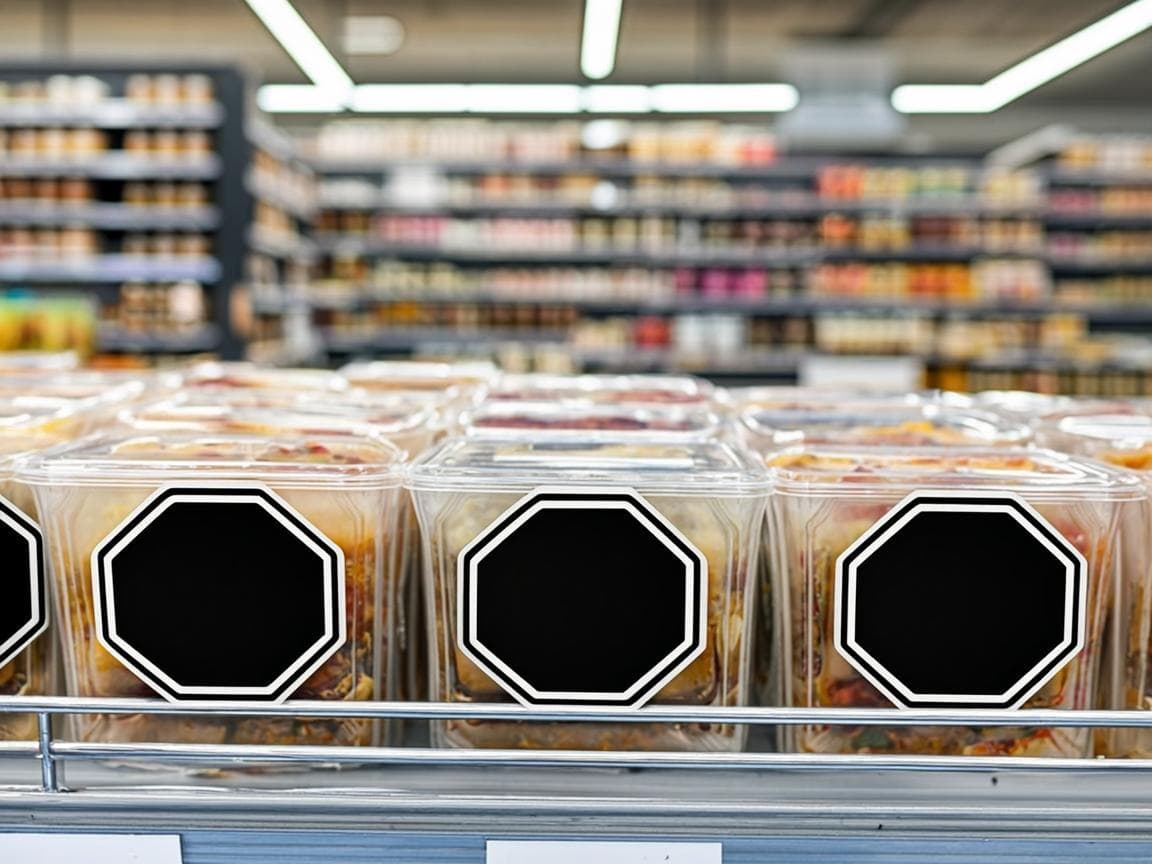
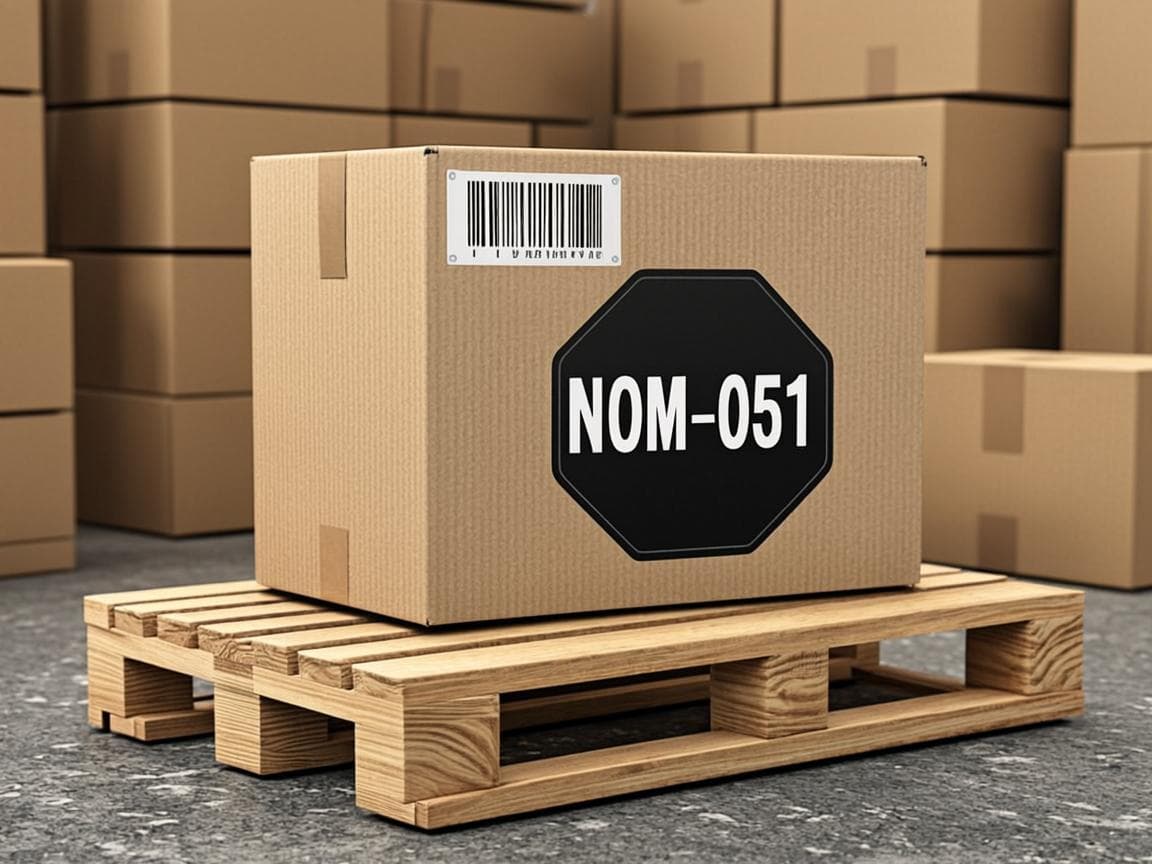
NOM-051 stopped being «the octagon»: the current modification turns the front of the pack into a space regulated to the millimeter — seals grouped in a single container, sizes proportional to the front area and cautionary legends that didn't exist before. And it enters in phases by company size: large companies already comply; micro and small businesses close the cycle in the 2028 Phase 3. For the designer and the label buyer, the standard stopped being a seal you paste at the end: it's a layout constraint you design from the first draft.
ETIVAL redesigns and prints the front layer of food products with seal geometry validated against the current standard — artwork review included in the brief analysis, before the run and ISO 9001:2015 per-batch traceability.
- 4 seals
- Excess octagons: calories, sugars, saturated fats, sodium
- % frontal
- Seal size is defined by the pack's front surface area
- 2028
- Phase 3: the phased calendar's close for micro and small companies
- $781,920
- Maximum fine per commercial-information NOM infringement (MXN)
What changes in the current modification
- Grouped seals: the excess octagons appear together in a single container on the front surface — not scattered wherever the artwork has room.
- Proportional size: seal size is calculated as a percentage of the pack's front area, not in fixed millimeters — the same product in two pack sizes carries two seal sizes.
- New cautionary legends: non-nutritive sweetener and caffeine declarations (content and warning) become part of the mandatory front block when the product triggers them.
- Regulated type and contrast: sans-serif, minimum size, contrast against the background — the seal must read at the consumer's decision distance.
The seals and their exact sizes
The geometry allows no interpretations: black octagon with a white border, centered text, a closed proportion between symbol and container — and the whole set scaled to the pack's front area. Small packages have their own rules (a reduced front area changes the percentage and allows alternate solutions), and multipacks declare per serving. The redesign classic mistake: leaving the seals for the end of the layout and discovering they no longer fit — the standard defines the space available for the rest of the art, not the other way around.
NOM-051 front-of-pack elements: when they apply and what they mean for design
The 2028 Phase 3: the phased calendar
The modification's entry into force is phased by company size: large companies complied first — and their redesign is already on the shelf moving the category's visual bar; medium and small companies follow in order; micro businesses close the cycle in the 2028 Phase 3. The strategic read: if your large competitors have already redesigned, your label under the previous geometry has a regulatory expiration date and a growing perception gap. Redesigning ahead of time costs one planned run; redesigning with the standard on top of you costs held product and emergency re-labeling.
Redesign checklist before the run
- 01Regulatory inventory: which seals and legends your actual formula triggers (per serving and per pack) — the nutrition table defines it, not the designer's intuition.
- 02Measure the pack's real front area: along the contour the authority defines, not the art canvas's rectangle.
- 03Group the seals in their container and scale the set to the applicable percentage before designing the rest.
- 04Verify type, contrast and legibility at shelf distance — not just on screen at 100% zoom.
- 05Validate the printed geometry with your supplier: a correct seal in a PDF can come out deformed on press if the art ignored the proportions.
- 06Reserve the batch and expiry zone with documented variable overprint.
- 07Transition plan: what happens to the current label inventory and on which order the redesign enters.
The local regulatory-layer strategy for importers: re-labeling and heat shrink sleeves.
NOM-050, NOM-051, importer responsibility and PROFECO fine ranges.
With the front-geometry review included in the brief analysis.
ETIVAL Editorial Team
We manufacture for all of Mexico · ISO 9001:2015
More guides
Apply this to your project.
A technical advisor reviews your case in under 24 business hours.